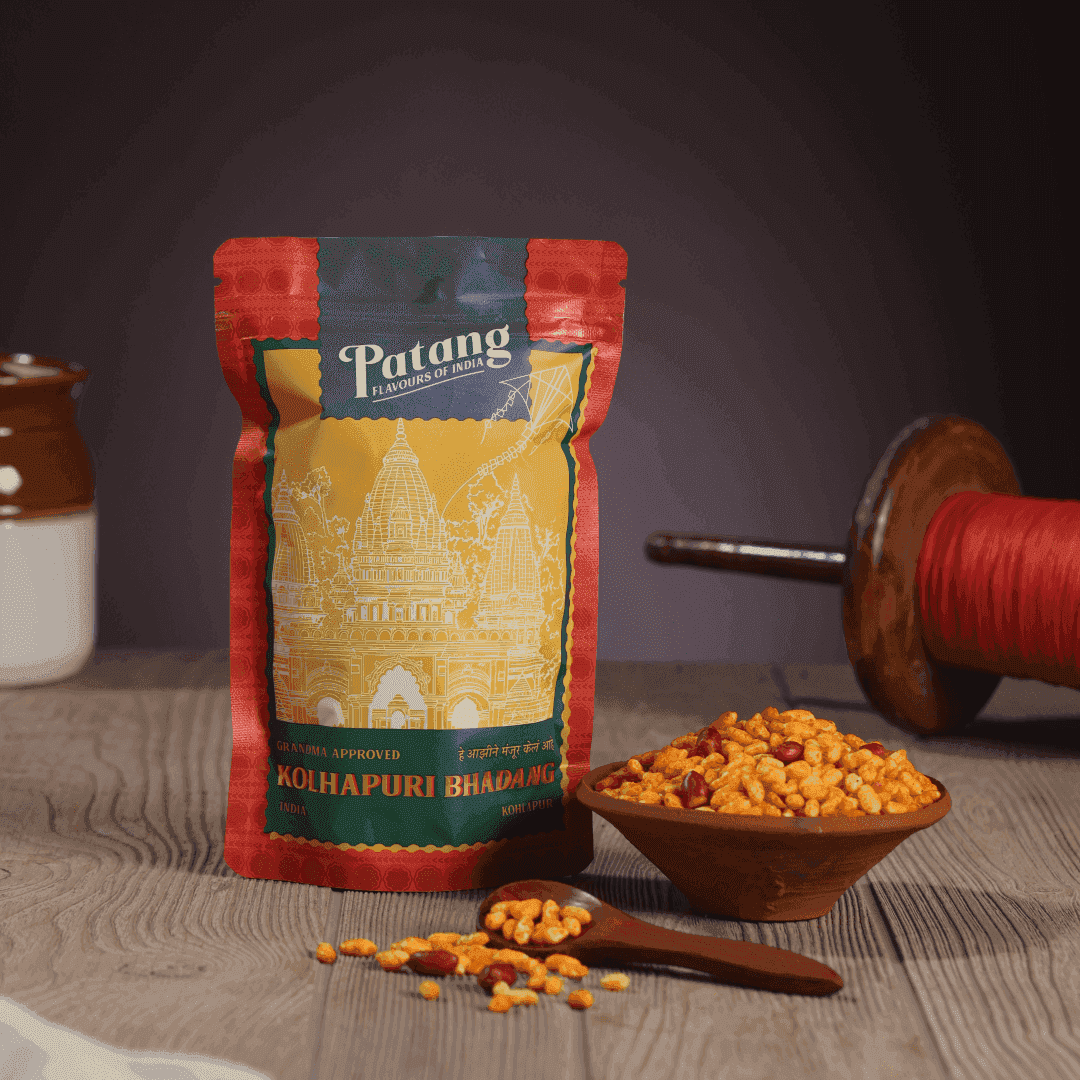
Kolhapuri Bhadang: Bold, Balanced Heat from Maharashtra
Kolhapuri Bhadang
Bold, Balanced Heat from Maharashtra
About the Snack
Kolhapuri Bhadang is bold by nature, but never careless. Made from light puffed rice and layered spices, it delivers warmth that builds gradually rather than hitting all at once. The texture stays airy, while the flavour carries depth, heat, and intent.
This is a snack that wakes up the palate without overwhelming it. Best eaten slowly, it fits naturally into evening snacks and moments when the appetite asks for something familiar yet spirited.
Why Kolhapur Is Special
Maharashtra holds an extraordinary range of landscapes and cultures, from forests and waterfalls to busy cities and long coastlines. Within this diversity lies Kolhapur, a city known for its fearless relationship with flavour.
Kolhapur’s food culture values confidence and honesty. Heat is not added for drama, but for character. The cuisine aims to comfort and energise at the same time, and that philosophy flows directly into its everyday snacks.
The Story Behind the Snack
Bhadang was created for everyday hunger. It was never elaborate or celebratory. It belonged to homes, small gatherings, and quiet pauses through the day.
Puffed rice kept it light, while spices gave it direction and purpose. Over time, many such snacks were adjusted to suit shelves and standardisation. Kolhapuri Bhadang remains a reminder of an older approach, when flavour was guided by instinct, locality, and trust in heat.
The Snacking Ritual
Kolhapuri Bhadang is often eaten in small bowls and shared casually. It pairs naturally with tea and settles easily into evening routines.
The heat keeps the palate engaged, while the light texture ensures it never feels heavy. Each serving invites another, not through excess, but through balance.
Why This Flavour Matters
Regional boldness deserves preservation. Kolhapuri Bhadang reflects Maharashtra’s warmth and confidence in its most direct form.
It reminds us that strong flavours can still be thoughtful, and that tradition does not need to soften itself to survive.